 3 minute read
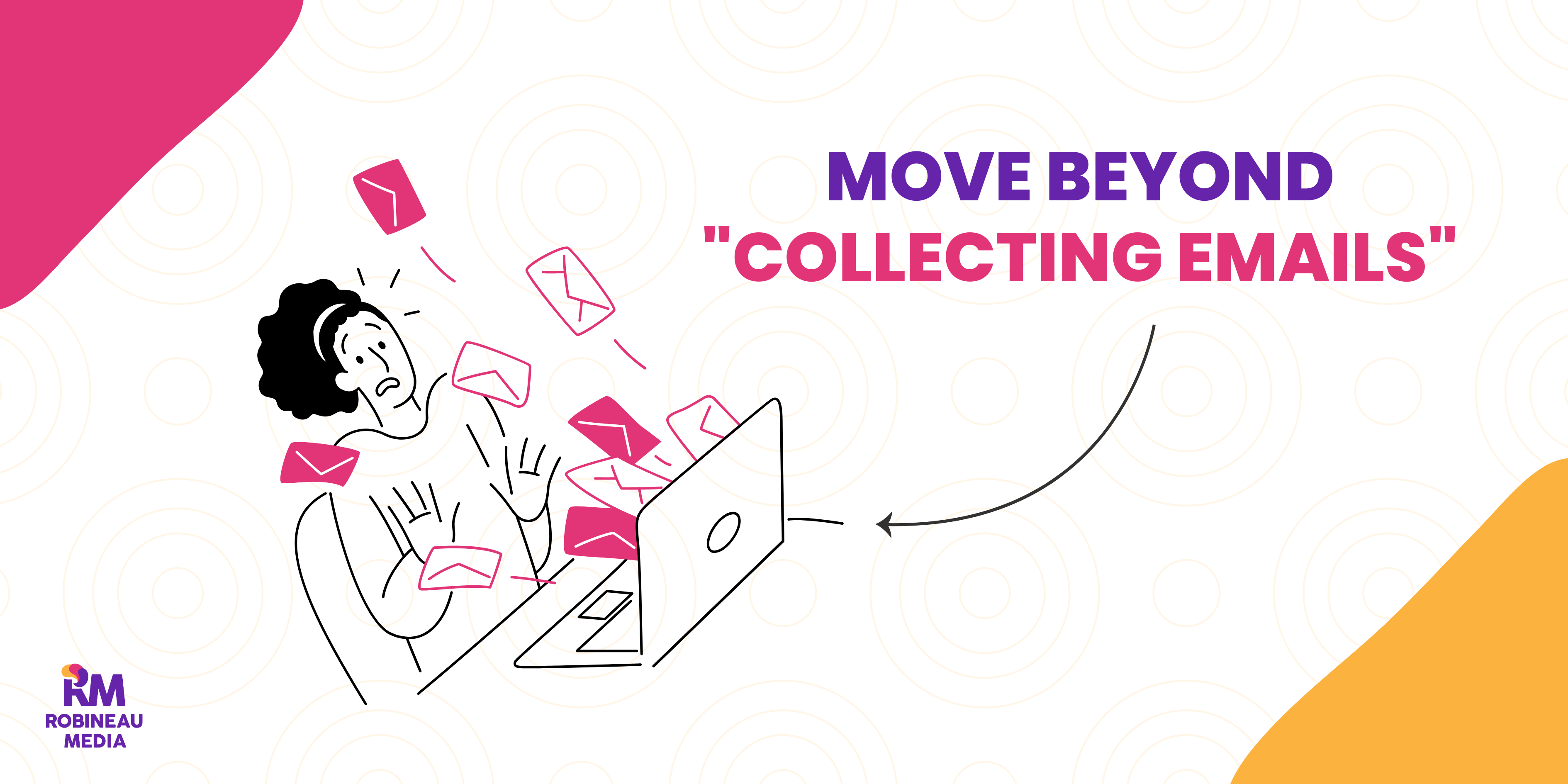
If you’re still thinking “we just need to collect more emails,” it’s time to rethink that approach.
For years, growing your email list felt like the ultimate goal. More contacts meant more reach, more campaigns, and more opportunity; and while building a list still matters, here’s the reality you’re probably already seeing: just having emails isn’t driving the results it used to.
What matters now isn’t how many emails you collect, it’s what you actually do with the data behind them.
You Don’t Need More Data… You Need Better Use of It
Take a step back and think about your current setup.
You likely already have customer data scattered across your email platforms, your website analytics, your e-commerce system, and even your ad accounts. The problem isn’t a lack of data. It’s that it’s disconnected.
An email address on its own doesn’t tell you much. But when you connect it to behavior, that’s when it becomes valuable.
So instead of asking, “How do I grow my list?” start asking, “How do I actually use the data I already have?”
That’s where the shift is happening.
Your CRM Should Be Working Harder for You
If your CRM is just sitting there holding contact records, you’re leaving a lot on the table.
Think of your CRM as the center of your entire marketing system, not just a database, but the place where everything connects. When it’s properly integrated, you’re no longer guessing what your customers are doing. You can actually see it.
That means you can:
- Understand how someone moves from first touch to purchase.
- Trigger campaigns based on real actions, not arbitrary timelines.
- Personalize messaging in a way that actually feels relevant.
If that’s not happening right now, it’s not a data problem… it’s an integration problem, and fixing that changes everything.
You’re Probably Missing What Happens After the Click
Here’s something most marketers overlook: what happens after someone clicks your ad.
If you’re only tracking online conversions, you’re missing a huge part of the picture, especially if your sales happen offline, over the phone, or through a sales team.
Think about how many people interact with your brand digitally but convert somewhere else. If that data never makes it back into your system, your campaigns are optimizing based on incomplete information.
That’s where offline conversion tracking comes in.
When you feed real-world outcomes back into your ad platforms, you stop optimizing for surface-level metrics and start optimizing for actual revenue. You’re no longer guessing what’s working, you know.
Your Customer Lists Are More Valuable Than You Think
As targeting gets more limited, your own data is becoming one of your biggest advantages.
Customer match audiences, built from your data, let you reconnect with people who already know your brand, exclude existing customers from acquisition campaigns, and build stronger lookalike audiences.
But here’s the catch: the quality of your results depends on the quality of your data.
If your list is outdated or unorganized, it won’t perform. But if it’s clean, segmented, and tied to real behavior, it becomes one of the most powerful tools in your marketing strategy.
So again, it’s not about having more emails. It’s about having better data to back them up.
Segmentation Is Where It Starts to Click
This is the part where your strategy really comes to life.
If you’re sending the same message to everyone on your list, you’re blending into the noise. But when you start segmenting based on behavior, things change.
Think about the difference between:
- Someone who just bought from you yesterday vs. someone who hasn’t engaged in six months
- A high-value repeat customer vs. a one-time buyer
- Someone browsing your site vs. someone ready to convert
You wouldn’t talk to all of them the same way, and your marketing shouldn’t either.
When you segment your audience properly, your messaging becomes more relevant, your timing improves, and your performance follows.
This Is Bigger Than Email… It’s About How Everything Works Together
Once you start connecting your data, something bigger happens. Your marketing stops feeling like a series of disconnected efforts and starts working as a system.
A potential customer might: click one of your ads, visit your site and browse a few products, get a follow-up email tailored to what they viewed, convert through a sales call or in-store visit, or later see a personalized upsell campaign.
That’s not luck, that’s orchestration. And it only happens when your data, tools, and strategy are aligned.
Why This Matters Right Now
You’re operating in a different environment than you were a few years ago.
Tracking is more limited. Privacy expectations are higher. Ad costs are rising. And platforms don’t give you the same level of visibility they used to. That means you can’t rely on shortcuts anymore.
If your strategy is still built around “collect more emails and hope for the best,” you’re going to feel those changes more than most.
But if you focus on building a strong first-party data system, one where data is connected, actionable, and actively used, you put yourself in control again.
So What Should You Do Next?
Start by being honest about where you are.
Is your CRM fully integrated, or is your data scattered across multiple systems? Are you tracking real outcomes, or just surface-level metrics? Are your audiences segmented meaningfully, or are you treating everyone the same? Are you actually using your data across channels or just storing it?
You don't need to fix everything at once. But identifying the gaps is the first step. Because the brands that are going to win this year aren’t the ones with the biggest lists, they’re the ones who know how to use their data to create better experiences and better results.
Are you ready to turn first-party data into a growth engine? Our team of experts at Robineau Media can help you build and activate a strategy that goes far beyond collecting emails.
